
|
|
Was this forwarded to you? Get The Fourth Estate AI Brief in your inbox →
|
|
|
|
View this issue in your browser
Tuesday Brief
Google Blows Up Search, Publishers Block the Archive, and Sports Teams Show Us What Not to Do
The interesting thing this week with AI and publishing — we're watching the ground shift under three different parts of our business all at once. Google announced the biggest change to search in 25 years. More than 340 local papers are blocking the Internet Archive. And professional sports teams are fumbling their AI rollouts in ways that should make every newsroom editor pay attention. None of these stories exist in isolation. They're all connected by the same question we keep coming back to: Who controls what happens to our content, and who benefits when AI systems consume it? Let's work through what actually matters here.
|
|
GOOGLE'S SEARCH GAMBLE
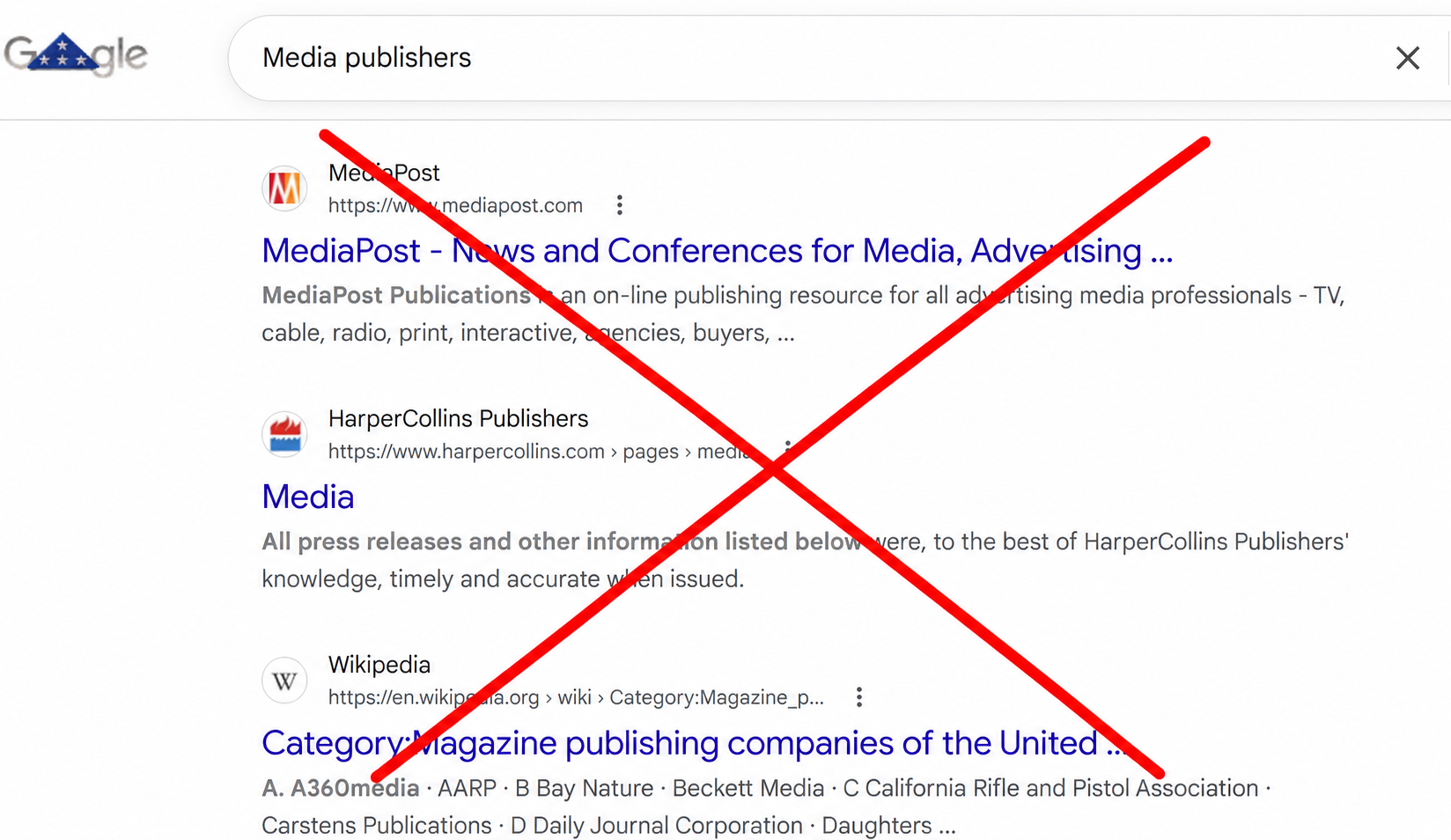
The Rundown: Google announced its biggest search overhaul in 25 years, and TechCrunch ran a headline that pretty much says it all: 'Google Search as you know it is over.'
The details:
- Search will now use Gemini 3.5 Flash to generate AI summaries instead of the classic blue link format, with conversational follow-ups built in.
- New 'information agents' can monitor topics in the background and push synthesized updates to users — even when their devices are closed.
- Google AI Overviews now reach 2.5 billion monthly active users; the Gemini app alone has 900 million.
- SEO experts are warning of 'devastating impact' on publishers who depend on organic search traffic.
- Google plans to spend $180-190 billion on capital expenditures in 2026, almost entirely focused on AI infrastructure.
Why it matters for us: If you're a community paper that gets even 20% of your web traffic from Google, this is the alarm bell. The referral pipeline we've all depended on isn't being neglected — it's being deliberately dismantled in favor of AI summaries that keep readers on Google instead of clicking through to your site.
Read at time.com →
|
|
|
THE ARCHIVE STANDOFF
The Rundown: More than 340 local news outlets are now limiting the Internet Archive's access to their journalism. The number's up from 241 in January. And here's the thing that I question... nobody's actually confirmed the harm they're protecting against.
The details:
- Major chains including McClatchy, Advance Local, Tribune Publishing, and Alden Global Capital subsidiaries are leading the blocking effort.
- No publisher has confirmed to Nieman Lab that an AI company has actually scraped their content from the Wayback Machine.
- Publishers describe the blocking as leverage for future AI licensing negotiations, not protection against proven harm.
- Working journalists — especially those covering news deserts — rely heavily on the Wayback Machine to research stories from now-closed outlets.
- The Internet Archive has partnered with Poynter and IRE to train 300 newsrooms on digital preservation by 2027.
Why it matters for us: Before you update your robots.txt, ask yourself this: when your next CMS migration breaks five years of links (and it will), do you want that backup to exist? Our own archives at the Citizen have saved us more than once. This feels like burning the barn to spite a thief who might not even exist.
Read at niemanlab.org →
|
|
|
THE SPORTS AI STUMBLE
The Rundown: Barrett Media published a piece this week on how professional sports organizations are making avoidable AI mistakes. Billion-dollar franchises. Dedicated tech staff. Still getting it wrong.
The details:
- Teams are rushing into AI adoption without clear strategic direction or measurable goals.
- The focus is on flashy technology over authentic connection with audiences.
- Content creation and fan engagement applications are often prioritized for novelty rather than value.
- Organizations are chasing what AI can do instead of asking what their audience actually needs.
Why it matters for us: If teams with million-dollar budgets can't figure out where AI actually helps versus where it just looks impressive on a slide deck, that's a useful warning for a newsroom with two reporters. Focus on the boring stuff that saves real time — like automating box scores — not the flashy stuff that impresses nobody who actually reads your paper.
Read at barrettmedia.com →
|
|
|
THE PRACTICAL STUFF- CHATGPT MEETS EXCEL
The Rundown: HubSpot and Mindstream dropped a guide this week on using ChatGPT to speed up Excel work. It's not sexy. But honestly? This is the kind of AI use that actually matters for publishers that spend time in Excel.
The details:
- ChatGPT can generate complex Excel formulas from plain English descriptions — no more Googling VLOOKUP syntax.
- AI can clean and standardize messy datasets by identifying inconsistencies and suggesting corrections.
- The guide covers automating repetitive tasks like data categorization and trend analysis.
- You can paste in a complex formula you inherited from someone who left the paper and get a plain-language explanation of what it actually does.
Why it matters for us: Most newsroom spreadsheet work — subscriber imports, ad billing, legal-notice tracking, circulation numbers — is exactly the repetitive, formula-heavy grind this guide targets. Whoever at your paper loses hours a week to it could get most of those hours back, and the smartest move is to upload the guide straight into ChatGPT and let it walk you through your actual file.
Read at offers.hubspot.com →
Read the full post →
|
|
|
THE UPDATE
Quick hits from the week
The Rundown: A few smaller items that crossed my desk:
The details:
- The Internet Archive-Poynter-IRE partnership aims to train 300 newsrooms on digital preservation by 2027 — worth watching if your archive situation is as messy as most.
- Google's $180-190 billion in planned AI infrastructure spending tells you exactly where the company's priorities are heading (hint: not toward sending you traffic).
- More publishers are treating robots.txt as a negotiating lever rather than a technical setting — the line between content protection and content strategy is officially blurred.
|
|
|
What is?
The Wayback Machine
What it is: A free public archive that has been quietly taking snapshots of websites since 1996. You paste in any web address, pick a date on a calendar, and see exactly what that page looked like at that moment — even if it's since been edited, redesigned, or deleted entirely. It's run by the Internet Archive, a nonprofit, and anyone can use it at no cost. Check it out, it's fun to see your website 10-20 years ago (for me, when I had hair!)
Why publishers care: When a source scrubs a statement, a company quietly changes its pricing page, or a government office deletes a public notice, the Wayback Machine often still has the original — a dated, citable record of what was actually there. It's also a lifesaver for your own paper: if a site crash or redesign ever wiped out years of old articles, there's a good chance the archive still has them, recoverable. And before you cite a web page in a story, you can save a snapshot yourself so the link can't change or vanish after you publish.
Visit web.archive.org →
|
|
|
|
Look — the playing field between a 5,000-circ weekly and a national daily has never been more level. From here, the gap only widens. The publishers who pick up these tools now, who think through their archive strategy now, who build direct reader relationships now... they'll still be standing in five years. The ones waiting for someone else to figure it out won't be. That's not pessimism. That's just what I'm seeing from where I sit.
Trevor Slette runs Quadd.ai — AI tools built for publishers.
|
|
— Trevor
Trevor Slette
Co-founder, Quadd.ai · 28-year community publisher
trevors@quadd.ai
·
Book a 15-min call
·
LinkedIn
P.S. P.S. Join other Publishers in seeing how you can save HOURS worth of work and give your writers the time back they need to cover more stories!
|
|
|
|
|
Turn PDFs into publishable copy.
Court records, box scores, honor rolls, fair results, meeting minutes — the documents that should not eat up an afternoon. Quadd's Document Intelligence learns your paper's exact layout, then turns the messy files into clean, copy-paste-ready text. Court reports we used to retype for an hour now take three minutes. Same number, every time.
See how Document Intelligence works →
|
|
|